
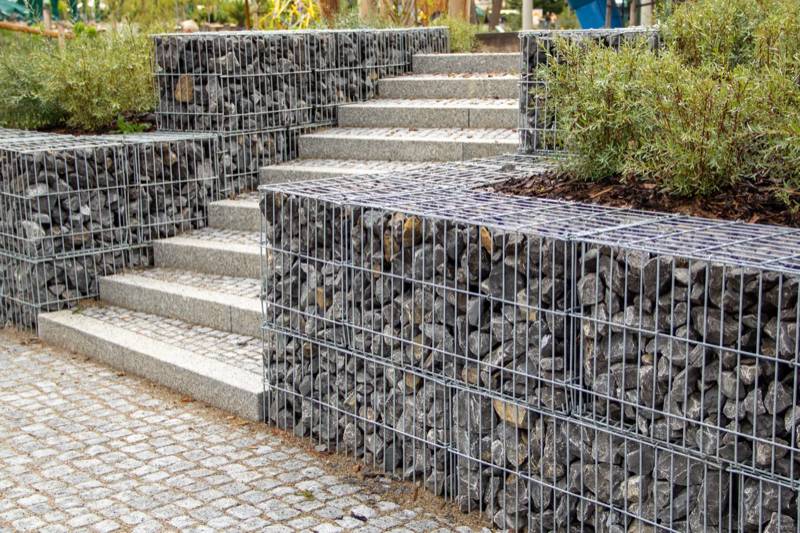
Retaining walls create levels, and levels need steps. Built well, steps tie the walls together and become a feature of the garden.
Step options
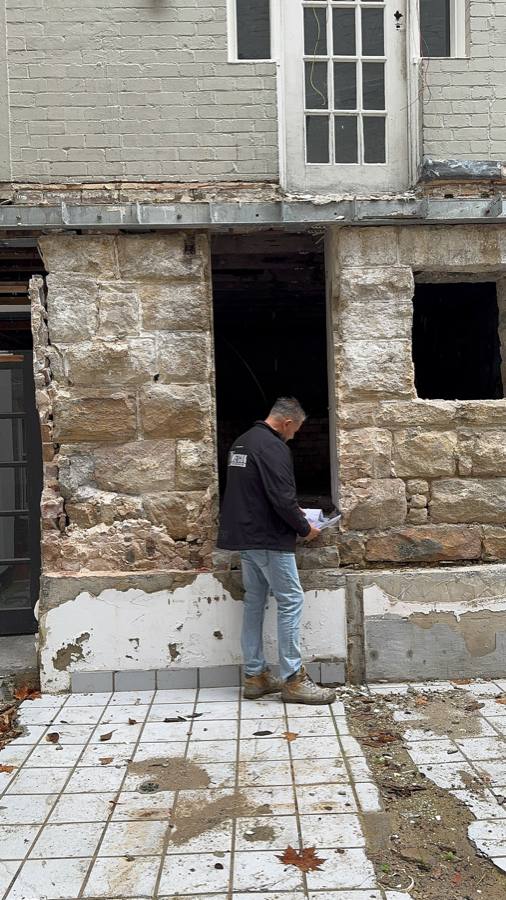
- Sandstone block steps: classic, durable and natural.
- Concrete steps: formed and poured, finished plain, exposed aggregate or tiled.
- Sleeper steps: concrete or timber sleepers with gravel or paved treads.
- Block steps: segmental block step units that match block walls.
- Floating steps: cantilevered stone or concrete for a modern look.
Comfortable, safe steps
- Consistent risers and treads: uneven steps cause trips.
- Comfortable proportions: outdoor steps are usually lower and deeper than indoor stairs.
- Slip-resistant treads, especially where wet or shaded.
- Handrails and balustrades where the height requires them.
- Lighting built into treads or walls for night-time safety.
Building steps into retaining walls
- Set out the step line and levels with the wall design, not as an afterthought.
- Build the side walls (cheeks) that retain the soil beside the steps.
- Prepare a compacted base or footing for each step.
- Lay or pour the steps, with a slight fall on each tread so water runs off.
- Drain behind the cheek walls like any other retaining wall.
Common mistakes
- Steps added after the walls are built, with awkward junctions.
- Treads that hold water.
- Steps on loose fill that settle and tilt.
- No handrail on taller flights.
Steps and walls by METCON
We design steps with the walls so they line up and last. See also tiered retaining walls and pool retaining walls.
Get your free retaining wall quote
Talk directly with Constantine, the builder. Free site assessment and an itemised quote within 24 hours.
Request Free QuotationFrequently Asked Questions
What are the best materials for garden steps in a retaining wall?
Sandstone, concrete and sleeper steps are the most common and durable, chosen to match the walls.
Do garden steps need a handrail?
Taller flights and steps beside drops usually need a handrail or balustrade for safety and compliance.
Can steps be added to an existing retaining wall?
Often, but cutting into an existing wall needs care so the wall stays stable. Planning steps with the wall is easier.