
Rock retaining walls bring a natural, rugged look that suits Sydney's bushland, coastal and sloping blocks. There are several quite different ways to build them.
Types of rock retaining wall
Boulder walls
Large boulders placed by machine, interlocked and battered back into the slope. Fast to build on big sites with good access.
Dry stone walls
Smaller stones fitted together by hand without mortar. Beautiful and traditional, best for lower garden walls.
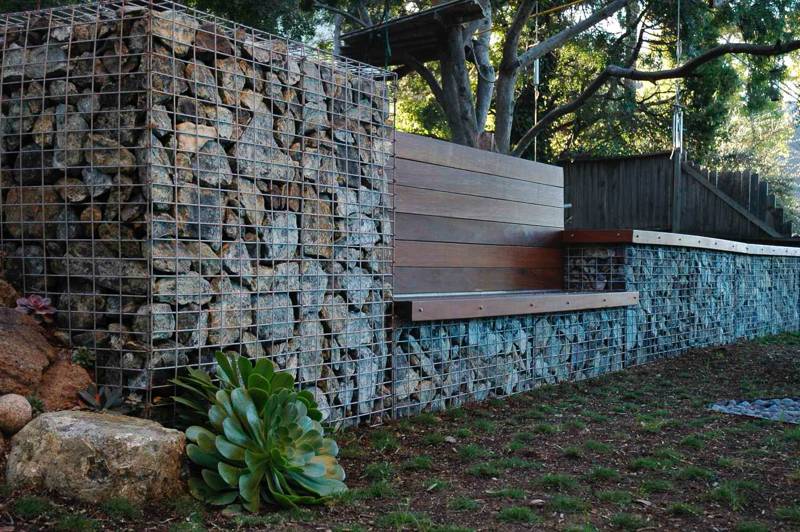
Rock cages (gabions)
Wire baskets filled with rock, stacked into a wall. Neat, free-draining and engineered for height. See gabion walls.
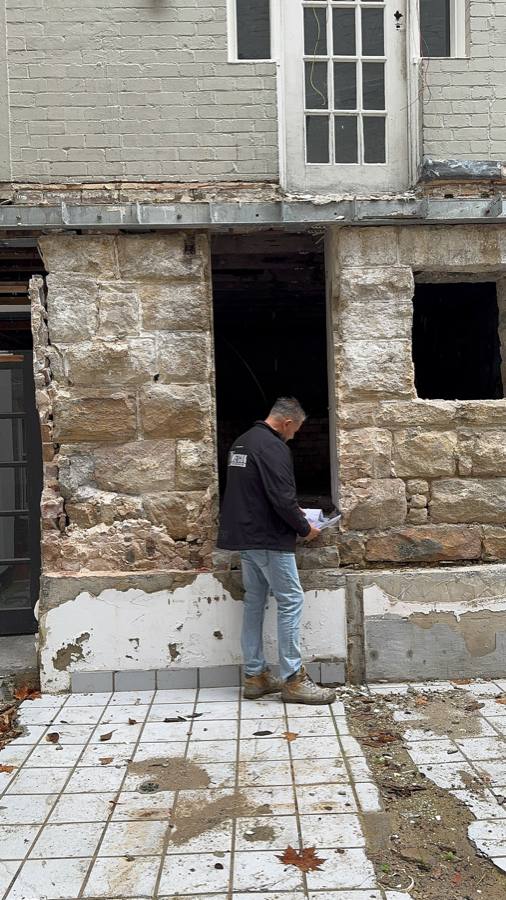
Sandstone block walls
Sawn or split sandstone blocks laid in courses. See sandstone retaining walls.
How rock walls stay up
Most rock walls are gravity walls: their weight holds the soil back. That means:
- A wide base, with the largest rocks at the bottom.
- A batter: the wall leans back into the slope.
- Interlocking placement, so rocks bear on each other, not on soil.
- A firm foundation on undisturbed ground or a compacted base.
Drainage
Rock walls drain through their gaps, but still need geofabric behind to stop soil washing out, and drainage at the base on wet sites.
Where rock walls suit
- Bush and coastal blocks.
- Large slopes with machine access.
- Natural landscaping and creek banks.
Limits
Boulder and dry stone walls have height limits for stability. Taller rock walls need engineering, and on tight sites a reinforced wall clad in stone may suit better.
Rock and stone walls by METCON
We build boulder, gabion and sandstone walls across Sydney, engineered where required.
Get your free retaining wall quote
Talk directly with Constantine, the builder. Free site assessment and an itemised quote within 24 hours.
Request Free QuotationFrequently Asked Questions
Do rock retaining walls need engineering?
Taller rock walls and walls carrying loads should be engineered. Low garden rock walls may not.
What is a rock cage retaining wall?
A gabion wall: wire mesh baskets filled with rock and stacked into a retaining wall.
Do rock walls need drainage?
They drain through their gaps, but still need geofabric behind and base drainage on wet sites.