
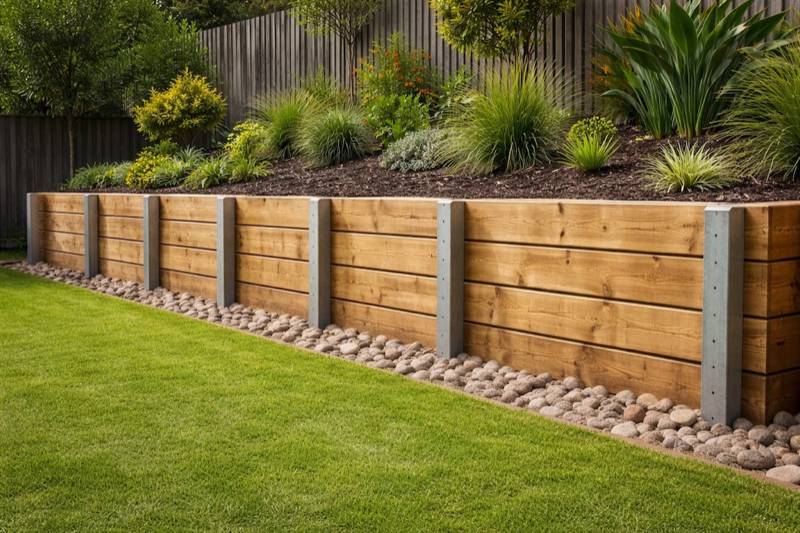
Timber sleeper retaining walls are one of the most common walls in Sydney backyards. They are quick to build, warm-looking and among the lowest-cost options up front. Built well they serve for years; built badly they lean within a few seasons.
Treated pine vs hardwood
Treated pine is the most common choice. Sleepers in contact with soil must be treated to the right level for in-ground use, usually marked H4, with H5 for posts or very wet ground. Hardwood sleepers are heavier and naturally more durable in some species, with a richer look, but cost more and still decay over time in wet soil.
Posts make or break the wall
The sleepers span between posts, and the posts carry the soil pressure into the ground. Options are:
- Galvanised steel H and C posts: the longest-lasting option, with sleepers slotted in. Recommended for most walls.
- Timber posts: lower cost, but they rot at ground level first, which is usually how timber walls fail.
Post depth, size and spacing depend on the wall height, soil and any load above the wall. Undersized posts are the most common reason timber walls lean.
Timber sleeper retaining wall design details
- Post footings in concrete, deep enough for the height.
- Sleeper length matched to post spacing, commonly 2.4m.
- Drainage: ag pipe at the base, clean gravel backfill and geofabric behind the sleepers.
- Weed mat or plastic behind the sleepers to reduce soil contact and moisture.
- Capping to tidy the top and shed water.
How long does a timber retaining wall last?
It depends on the treatment level, drainage, posts and how wet the site is. Walls with steel posts, good drainage and correctly treated sleepers last far longer than timber-post walls sitting in wet clay. Even so, timber has a shorter life than concrete sleeper, block or stone walls, which is why many owners now choose concrete sleepers with a timber-look finish.
When timber is the right choice
- Low garden walls and raised beds.
- Budget-sensitive jobs where replacement later is acceptable.
- Natural landscaping where timber suits the garden.
Signs a timber wall needs replacing
- Soft or crumbling sleepers at ground level.
- Posts that move when pushed.
- Sleepers bowing or popping out.
- The wall leaning forward.
Compare the options in concrete sleeper vs timber retaining walls.
Get your free retaining wall quote
Talk directly with Constantine, the builder. Free site assessment and an itemised quote within 24 hours.
Request Free QuotationFrequently Asked Questions
What treatment level do retaining wall sleepers need?
Treated pine in contact with soil generally needs an in-ground treatment level, usually H4, with H5 for posts or very wet conditions.
Should timber retaining walls have steel posts?
For most walls, yes. Galvanised steel posts last much longer than timber posts, which usually rot at ground level first.
Can a timber retaining wall be built without drainage?
It should not be. Drainage behind the wall reduces water pressure and keeps the timber drier, which extends its life.