
Concrete sleeper and timber are the two most popular retaining wall materials in Sydney. They account for roughly 70 percent of the residential retaining walls we build across the city. Both do the job, but they differ significantly in cost, lifespan, maintenance, appearance and structural capability.
This guide puts them side by side so you can make an informed decision based on your site, your budget and how long you want the wall to last.
Quick Comparison at a Glance
| Factor | Concrete Sleeper | Timber |
|---|---|---|
| Cost per lineal metre | $350 to $900 | $250 to $600 |
| Lifespan | 50 to 80+ years | 15 to 25 years |
| Maximum height | Up to 3+ metres (engineered) | Typically up to 1.2 metres |
| Maintenance | Near zero | Regular (staining, pest treatment) |
| Termite risk | None | Moderate to high |
| Appearance | Modern, clean lines | Natural, rustic |
| Installation time | 2 to 5 days (typical) | 1 to 3 days (typical) |
| Best suited for | Long-term, structural, high walls | Budget projects, garden beds, low walls |
Cost Comparison
Timber is the more affordable option upfront. A standard treated pine retaining wall under 1 metre in height typically costs $250 to $450 per lineal metre installed, depending on the height and site access. Hardwood timber (such as ironbark or spotted gum) costs more, ranging from $400 to $600 per lineal metre.
Concrete sleeper walls start at around $350 per lineal metre for a basic system under 1 metre. Taller walls with galvanised steel posts, deeper footings and additional engineering push the price to $600 to $900 per lineal metre.
The real cost difference: When you factor in the lifespan, timber costs roughly $16 to $24 per lineal metre per year of service. Concrete sleeper costs $5 to $12 per lineal metre per year. Over 30 years, the concrete sleeper wall is significantly cheaper because you avoid the cost of replacing a timber wall that has reached the end of its life.
Lifespan and Durability
Concrete Sleeper
A well-built concrete sleeper retaining wall has a lifespan of 50 to 80 years or more. The concrete panels themselves are virtually indestructible in normal residential use. The galvanised or powder-coated steel posts that hold the panels in place are rated for 50 years or more in non-coastal environments. In coastal areas of Sydney, we recommend additional protective coatings on the steel to prevent salt-air corrosion.
Concrete does not rot, does not attract termites, and does not warp or split in Sydney's heat. It performs equally well in full sun and in damp, shaded areas where timber would deteriorate rapidly.
Timber
Treated pine retaining walls typically last 15 to 20 years before they need replacement. Hardwood timber walls can last 20 to 25 years if properly maintained. However, these figures assume the wall has been built correctly with adequate drainage behind it. Without proper drainage, timber walls can fail in as little as 8 to 10 years due to moisture retention and accelerated rot.
Sydney's climate presents particular challenges for timber retaining walls. The combination of warm temperatures, regular rainfall and high humidity creates ideal conditions for fungal decay and termite activity. We see many timber walls across Sydney's North Shore, Eastern Suburbs and Inner West that have failed well before their expected lifespan because of these factors.
Structural Strength
Concrete sleeper walls are significantly stronger than timber. A standard concrete sleeper system with galvanised steel H-posts can comfortably retain soil up to 1.5 metres without specialist engineering. With engineered footings and heavier-gauge steel posts, concrete sleeper walls can be built to 3 metres or more.
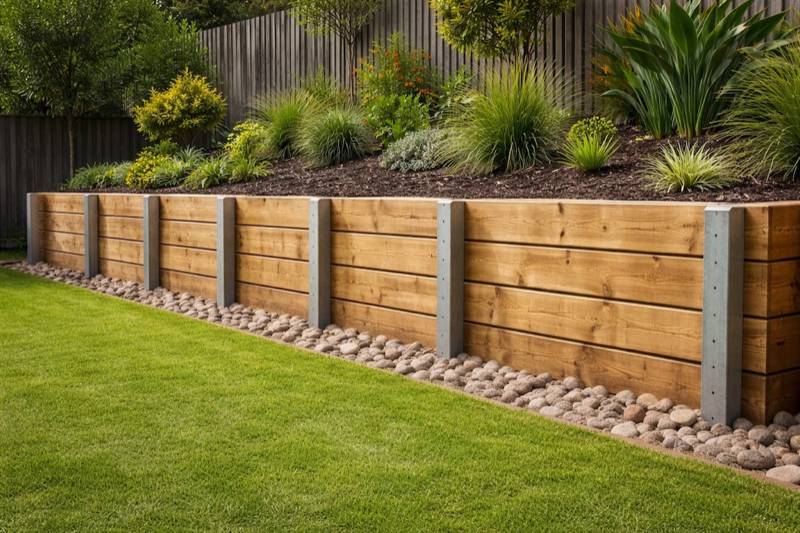
Timber walls are generally limited to around 1.2 metres in height for a standard gravity wall design. Taller timber walls require additional engineering, including thicker posts, deeper embedment and often ground anchors or deadman tie-backs. At these heights, the cost of engineering a timber wall approaches or exceeds the cost of a concrete sleeper system that is naturally suited to the task.
Load-Bearing Capacity
If your retaining wall needs to support a driveway, a structure, or heavy surcharge loading (such as a parked vehicle above the wall), concrete sleeper is the stronger choice. Timber walls can support light loads at low heights, but they are not recommended for structural applications where the wall supports anything other than retained soil and garden.
Maintenance
Concrete Sleeper
Concrete sleeper walls require almost no maintenance. An occasional wash with a garden hose is all that is needed to keep them looking clean. The concrete panels do not need sealing, painting or treating. The steel posts may benefit from a touch-up of paint every 10 to 15 years if the coating shows signs of wear, but this is a minor task.
Timber
Timber retaining walls require ongoing maintenance to maximise their lifespan:
- Staining or oiling every 2 to 3 years to protect against UV damage and moisture
- Termite inspections annually, particularly for treated pine walls (treatment does not make timber immune to termites)
- Drainage maintenance to ensure the ag pipe and gravel behind the wall continue to function
- Replacement of individual timbers that show signs of rot or splitting
Over a 20-year period, the cumulative cost of maintaining a timber retaining wall can add $50 to $100 per lineal metre to the total cost of ownership.
Appearance and Design Options
Concrete Sleeper
Modern concrete sleepers are available in a wide range of finishes that replicate the look of natural materials. The most popular options in Sydney include:
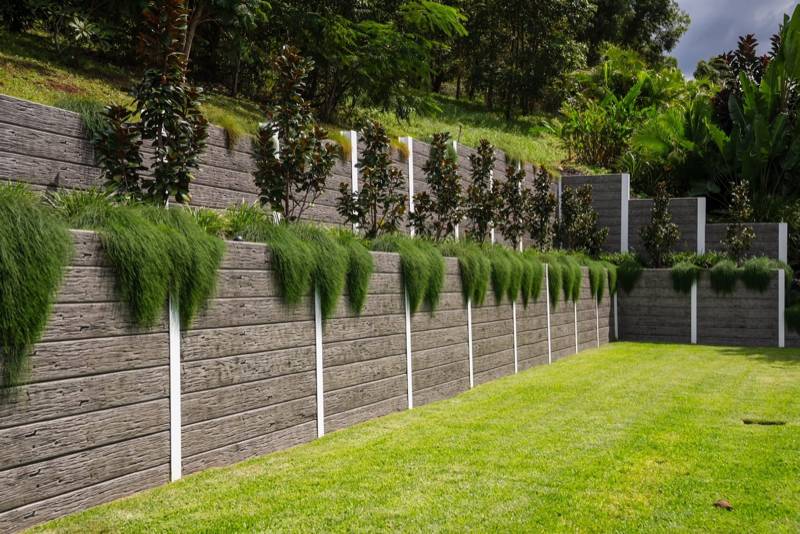
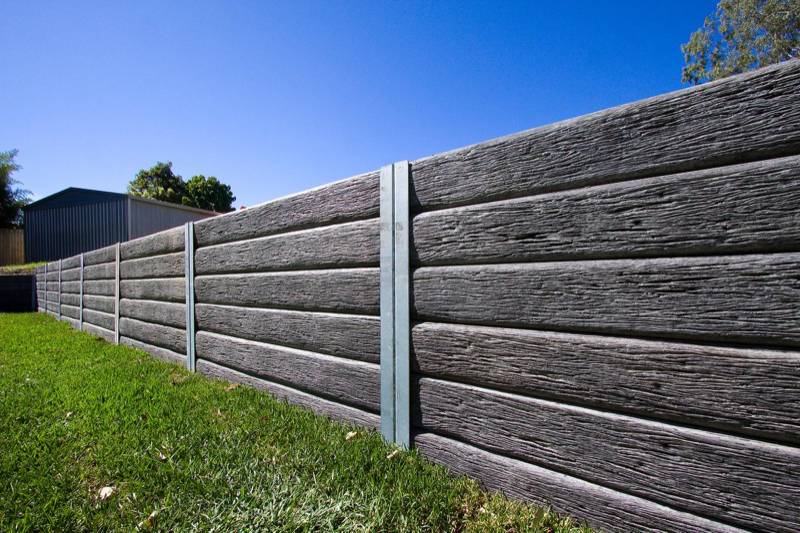
- Woodgrain finish: Textured to look like timber, available in charcoal, sandstone and natural tones
- Smooth finish: Clean, contemporary look that suits modern homes
- Rock face finish: Textured to resemble natural stone, popular for bush-setting properties
- Plain grey: The most economical option, often used for side boundaries and non-visible walls
Steel posts can be galvanised (silver), painted or powder-coated in colours to match your home or fence. The posts sit between the panels and form a visible part of the wall's design.
Timber
Timber has a natural warmth and organic appearance that many homeowners love. It blends particularly well with established gardens and bush-style landscapes. Hardwood species like ironbark and spotted gum develop a silver-grey patina over time that some people find attractive, though others prefer to maintain the original colour with oil or stain.
Treated pine has a green tint when new, which fades to grey over time. It can be stained to any colour, though the stain will need reapplication every few years.
Builder's tip: If you love the look of timber but want the durability of concrete, consider a woodgrain-finish concrete sleeper. From a few metres away, it is almost indistinguishable from real timber, and it will outlast a genuine timber wall by decades.
Environmental Considerations
Treated pine contains preservative chemicals (typically copper, chromium and arsenic, known as CCA) that prevent decay and insect attack. While modern CCA-treated timber is considered safe for residential use, some homeowners prefer not to use it near vegetable gardens or in areas where children play.
Concrete sleepers have a higher embodied energy at manufacture, but their significantly longer lifespan means fewer replacements and less waste over time. A single concrete sleeper wall replaces two or three timber walls over the same period, which reduces the total environmental impact.
Which Should You Choose?
Choose concrete sleeper if:
- You want a wall that will last 50 years or more without replacement
- Your wall is over 1 metre in height
- The wall needs to support a driveway, structure or heavy load
- You want minimal ongoing maintenance
- Termite risk is a concern in your area
- You are building on a boundary where failure would affect a neighbour
Choose timber if:
- Your budget is tight and the wall is under 1 metre
- You want a natural, rustic look for a garden setting
- The wall is decorative rather than structural
- You are happy to maintain and eventually replace the wall
- The wall is in a temporary location (you plan to renovate within 10 to 15 years)
What We Recommend
For most Sydney residential projects, we recommend concrete sleeper retaining walls. The upfront cost is higher than timber, but the long-term value is substantially better. You get a stronger wall, a longer lifespan, zero maintenance and no termite risk.
We still build timber retaining walls when they are the right fit for the project. For low garden walls under 600mm, decorative borders, and budget-conscious projects where the homeowner understands the maintenance commitment, timber remains a practical and attractive option.
Every site is different. Soil type, slope gradient, drainage conditions, access constraints and the intended purpose of the wall all influence which material is the best choice. That is why we offer a free site assessment before quoting. Constantine will visit your property, inspect the site and recommend the material that gives you the best result for your budget.
Not sure which material is right for your wall?
Book a free site assessment. Constantine will inspect your property and recommend the best solution for your site and budget.
Request Free QuotationFrequently Asked Questions
Can I mix concrete sleeper and timber on the same property?
Yes. Many of our clients use concrete sleeper for the main structural retaining wall and timber for smaller garden beds or decorative features elsewhere on the property. This is a practical way to manage the budget while ensuring the critical wall is built to last.
Is hardwood timber worth the extra cost over treated pine?
Hardwood typically lasts 5 to 8 years longer than treated pine and has a more attractive natural appearance. However, it still has a fraction of the lifespan of concrete sleeper. If your budget allows for hardwood but not quite for concrete sleeper, it is worth getting a quote for both before deciding. The price difference is often smaller than people expect.
Do concrete sleeper walls crack?
Hairline surface cracks can appear in concrete sleepers, particularly in the first few years as the concrete cures fully. These are cosmetic and do not affect the structural performance of the wall. Structural cracking is rare and is usually caused by inadequate drainage or foundation movement, not a defect in the sleeper itself.
Can I build a concrete sleeper wall myself?
While it is technically possible for a handy homeowner to install a low concrete sleeper wall, we do not recommend it. The panels are heavy (each sleeper weighs 60 to 100 kilograms), the post footings must be set accurately, and incorrect drainage can cause premature failure. For walls over 600mm, a licensed builder should carry out the work to ensure structural integrity and compliance with NSW building regulations.