
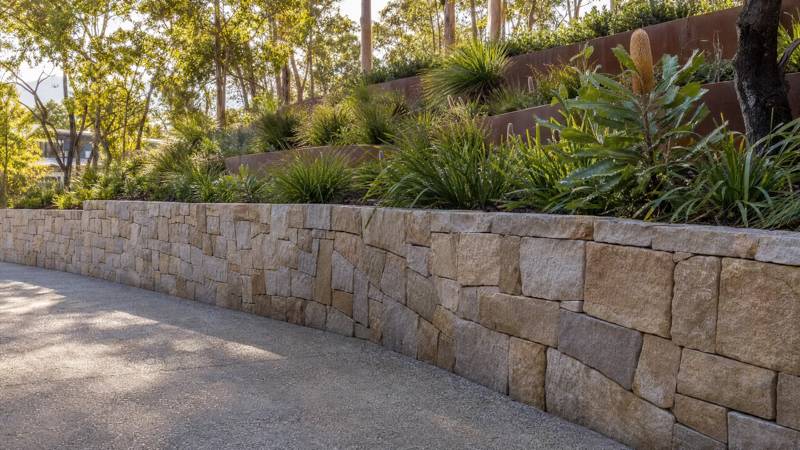
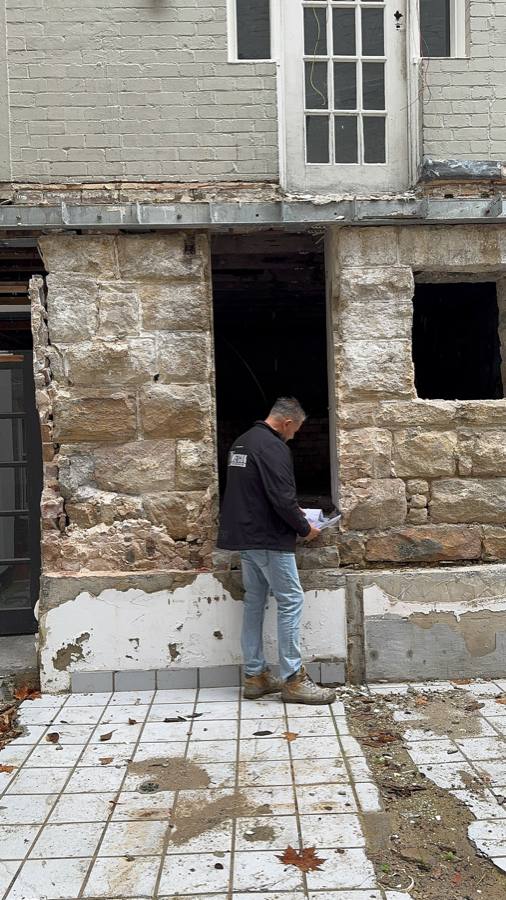
Roots can push on a wall, block drains and follow water through joints. Removing them carelessly can harm the tree or make it unstable.
Is the tree the cause?
Check drainage, age, footing and load too. A tree next to a failing wall is not proof.
Before cutting anything
- Find out who owns the tree.
- Check council tree rules.
- Ask an arborist about the root zone and stability.
- Ask an engineer what the soil and wall will do after.
Ways to repair around a tree
- Bridge over roots with piers at chosen positions.
- Use a wall type that tolerates small movement.
- Step the wall around the trunk.
- Hand dig near major roots.
Choosing plants
Keep large trees well away from walls and drains, and pick smaller species for terraces. See retaining wall garden beds.
How roots cause damage
Small roots find moisture behind a wall and grow into drains, joints and gravel. As they thicken, they can lift capping or push on blocks. A large tree in wind can also rock the soil around its base. In reactive clay, roots may dry the ground and cause movement some distance away.
Designing a wall that stays near a tree
The arborist sets out the area to protect. The engineer can then look at pier positions, a bridge over roots, or moving the wall. Pier holes may need to be dug by hand or with air so major roots are found before they are cut.
Protect it during construction
Keep soil, concrete washout and machines off the root area. Compacted soil can harm a tree without any root being cut, and the damage may take a year or more to show.
Get your free retaining wall quote
Talk directly with Constantine, the builder. Free site assessment and an itemised quote within 24 hours.
Request Free QuotationFrequently Asked Questions
Can I cut my neighbour's roots?
Get advice first. Council rules and tree stability matter.
Will removing the tree fix it?
Not always. A damaged wall stays damaged, and clay can change after removal.
Is a root barrier enough?
It can help in some cases, but must be placed to suit the tree and wall.