
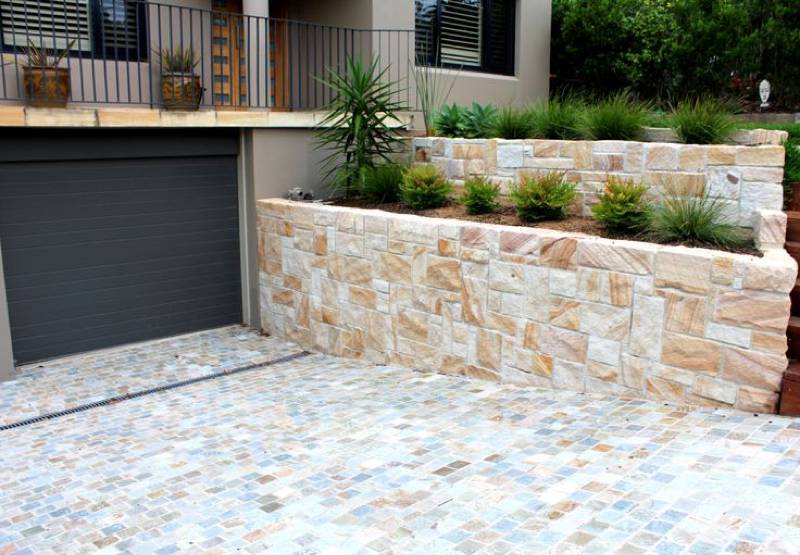
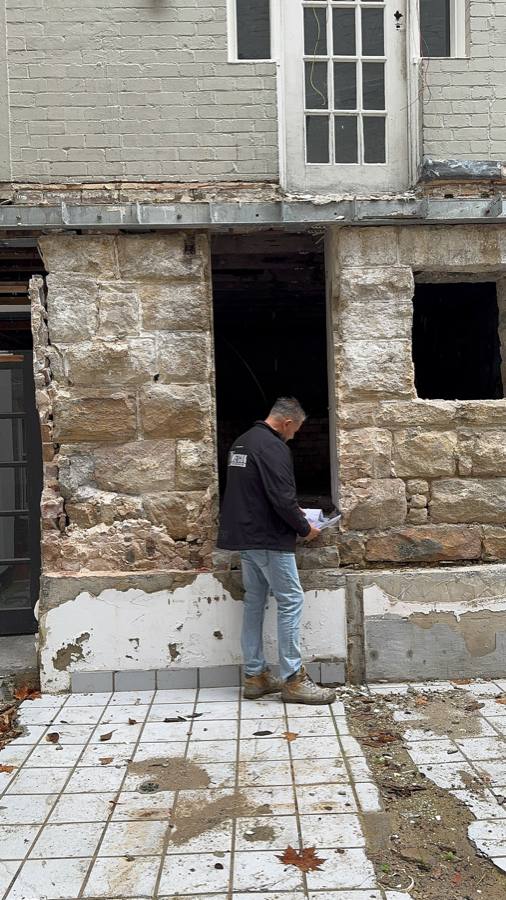
Sandstone logs are large rectangular blocks. Their weight does much of the work of holding soil back.
Why people choose them
- A natural Sydney look.
- Fewer pieces than small stone walls.
- They double as steps and seating.
- They settle into older gardens well.
What the site needs
Logs are heavy. Think about machine access, overhead wires, slopes, driveways and where stone will be stored.
How they are built
- Excavate and prepare a firm base.
- Place the first course level, partly below ground.
- Stagger joints and step back as designed.
- Place fabric, gravel and drain behind.
- Cap and finish.
What changes the cost
Stone grade, number of cuts, access, height, excavation and haulage.
Compare
See sandstone walls and rock walls.
Choosing the stone
Ask to see the actual grade. Logs vary in colour, hardness and finish. Sawn faces look neat and modern, while rock faced blocks look more natural. Softer stone can weather faster where it stays wet or is hit by salt.
Planning the delivery
A load of stone needs somewhere firm to land. Check footpath permissions, overhead wires and whether the machine can carry a full block across the slope. Moving a load twice on a steep site can cost more than expected.
Finishing touches
- A neat base course sets the line of the entire wall.
- Cut stone ends look better than leftover gaps.
- Steps should be planned with the logs, not added later.
- Level areas in front make the wall easier to maintain.
Stone can be reused if a wall has moved, so ask about salvage before paying for all new blocks.
Get your free retaining wall quote
Talk directly with Constantine, the builder. Free site assessment and an itemised quote within 24 hours.
Request Free QuotationFrequently Asked Questions
Do sandstone logs need a footing?
They need a suitable base. Higher walls or poor ground may need an engineered footing.
Do they need drainage?
Yes. Joints let some water out, but drainage behind is still needed.
Can they be used on a tight block?
It depends on machine access. Smaller stone may suit better.