
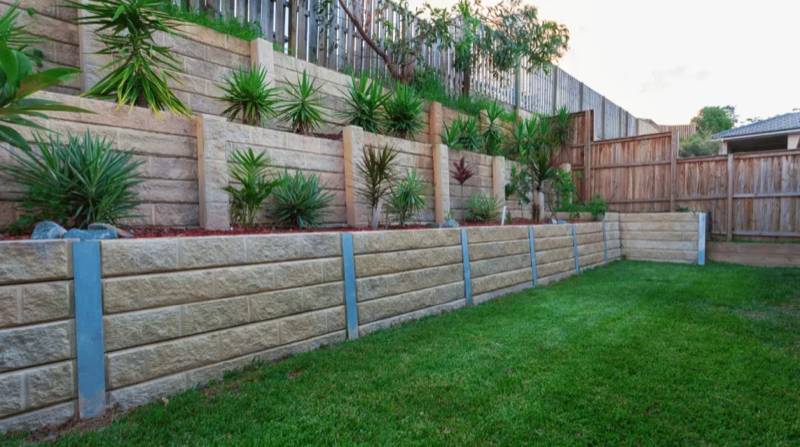
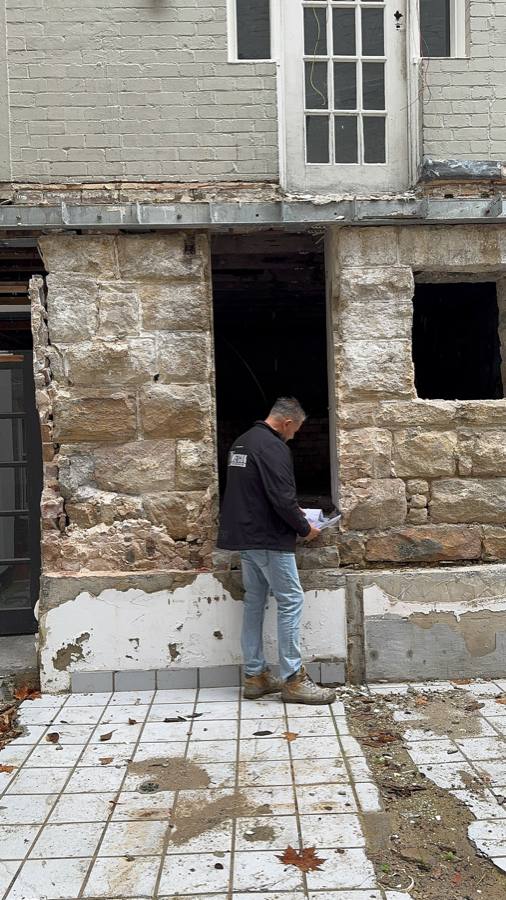
There is no one height that applies everywhere. The limit comes from the engineered system and the site.
What sets the limit
- Sleeper strength and thickness.
- Post size and spacing.
- Pier diameter and depth.
- Soil type and groundwater.
- Slope, driveway or building above.
- Approval rules.
Taller needs much more
Soil pressure rises quickly with height. A wall twice as high needs far more than twice the strength.
Options for a big level change
- Two or more terraces, if spaced so the top wall does not load the lower. See tiered walls.
- Soldier piles or anchored systems. See soldier pile walls.
- Reinforced concrete or block.
- A battered slope above a lower wall.
Product tables
Manufacturer tables assume certain soils and loads. If your site is outside them, the table does not apply.
Why online tables can mislead
A table may assume level ground behind, firm soil, good drainage and no vehicles. Change one of those and the result changes. Wet clay with a driveway above is a very different wall to dry sandy clay under a lawn, even if both are the same height.
Measure the height properly
Engineers look at the soil being held back, which may not match the height you see. A buried sleeper at the front, a slope behind and a future cut below can all add to the effective height. Give the engineer existing and finished levels.
What gets bigger as it gets taller
Piers get deeper and wider, posts get heavier and closer together, and drilling may need a larger machine. At some point, two terraces or a different wall system is better value than pushing sleepers further. That decision is best made before ordering.
Get your free retaining wall quote
Talk directly with Constantine, the builder. Free site assessment and an itemised quote within 24 hours.
Request Free QuotationFrequently Asked Questions
Can I add one more sleeper on top?
Do not assume so. Extra height can overload the posts and piers.
Do two low walls count as one?
They can if close together, because the top wall loads the bottom one.
Does a fence add height?
It adds wind load, and may affect approvals.