
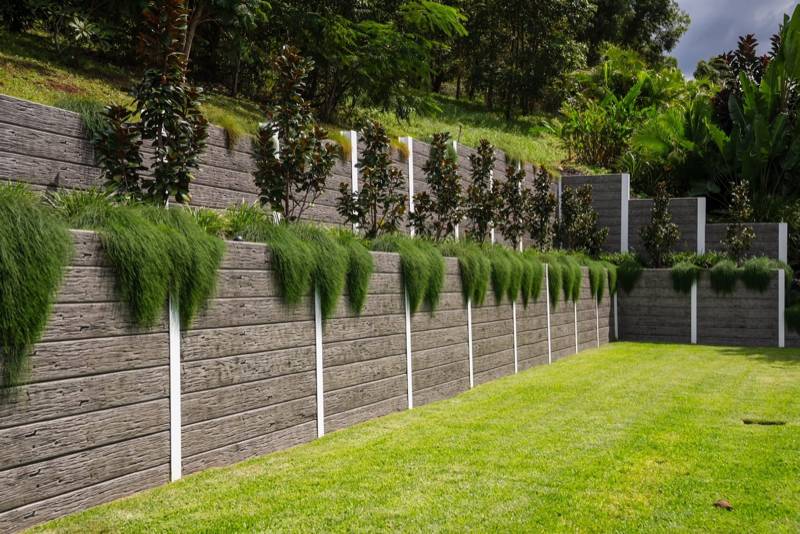
Soldier piles are upright piles placed along the line of a wall before the main dig. Panels, sleepers or sprayed concrete fill between them as soil is removed.
Why use them
- Less excavation behind the wall.
- Support is in place before the dig.
- Useful close to boundaries.
- Suited to deeper cuts than a garden wall.
How it is built
- Survey the line and find services.
- Drill the pile holes and place the steel.
- Pour concrete and let it gain strength.
- Excavate in stages.
- Place infill and drainage at each stage.
- Add anchors or props if designed.
What affects it
Rock, groundwater, rig access, overhead wires, neighbouring footings and how deep the cut is.
Is it overkill?
For a low garden wall, probably. See concrete sleeper height.
What the neighbours may notice
Drilling can be noisy and a rig is large. Before work starts, record the condition of nearby paving, walls and buildings. Set out how vibration or movement will be checked and who will respond if a limit is reached.
Reading a quote
Ask whether the price includes:
- Bringing the rig to site and building a working platform.
- Drilling through rock and casing for wet holes.
- Removing drilling spoil.
- Infill panels, drainage and capping beam.
- Anchors, testing and monitoring.
Two quotes can use the same pile depth but leave out very different parts of the job.
Permanent finish
Piles can be covered by a separate wall, sprayed concrete or panels. Decide how the face will look and how water will drain through it before the piles are drilled.
Get your free retaining wall quote
Talk directly with Constantine, the builder. Free site assessment and an itemised quote within 24 hours.
Request Free QuotationFrequently Asked Questions
Is a sleeper wall a soldier pile wall?
The idea is similar. A true soldier pile system is usually installed before excavation and designed for larger loads.
Do piles need to reach rock?
Not always. The engineer decides from the ground conditions.
Can piles cross a boundary?
Not without the neighbour's agreement.