
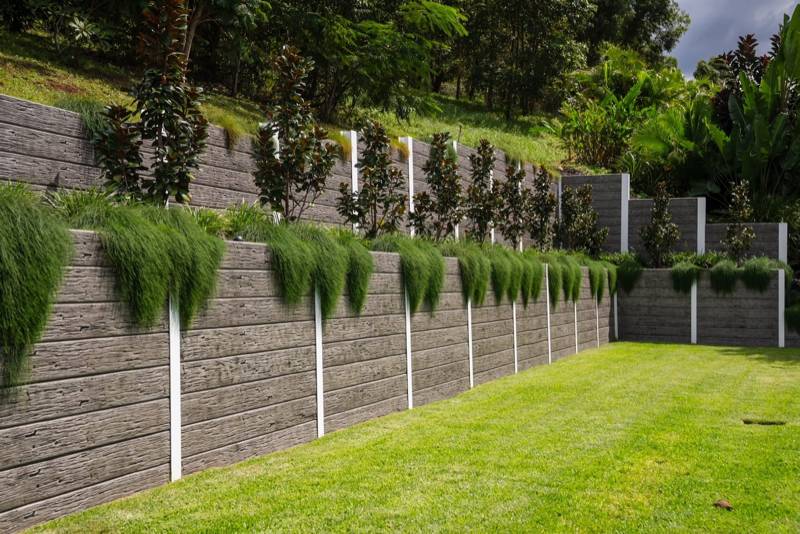

A sloping backyard can be turned into lawn, entertaining space and gardens with the right retaining walls. The key decisions are where the levels go and whether you cut, fill or both.
Cut, fill or both
- Cut: dig into the slope and build a wall to hold back the higher ground. Creates space close to the house, but means excavation and spoil removal.
- Fill: build a wall on the low side and fill behind it. Avoids excavation, but fill must be compacted in layers and adds load to the wall.
- Cut and fill: balancing the two often reduces walls and soil movement.
Choosing the levels
- Survey the slope and existing levels.
- Decide what each area is for: lawn, pool, deck, play or garden.
- Set levels that connect to the house and doors.
- Split big height changes into terraces. See tiered retaining walls.
Slopes you keep
Not every change in level needs a wall. Gentle batters planted with groundcovers can work for low height changes, if the slope is stable and does not need mowing.
Drainage on sloping blocks
Sloping blocks send water downhill towards walls and houses. Every wall needs drainage behind it, and surface water should be collected and directed to stormwater. See retaining wall drainage.
Neighbours and boundaries
Changing levels near boundaries affects neighbours: water flow, privacy, fence heights and wall responsibility. See who pays for a retaining wall between neighbours.
Approvals
Walls over 600mm, cut and fill beyond the exempt limits, and walls near boundaries usually need approval. See retaining wall heights.
What drives the cost
Total wall length and height, excavation and spoil removal, access for machines, wall type, drainage, engineering and approvals. See the retaining wall cost guide.
Levelling your backyard
We assess the slope, propose levels and walls that suit your budget, and handle engineering and approvals.
Get your free retaining wall quote
Talk directly with Constantine, the builder. Free site assessment and an itemised quote within 24 hours.
Request Free QuotationFrequently Asked Questions
How do you level a sloping backyard?
By cutting into the slope, filling on the low side, or both, with retaining walls holding the new levels.
Is it cheaper to cut or fill a sloping yard?
It depends on access, soil and spoil removal. Balancing cut and fill often reduces the total cost.
Do I need approval to level my backyard?
Often, if walls exceed 600mm or cut and fill go beyond exempt limits, or walls sit near boundaries.