
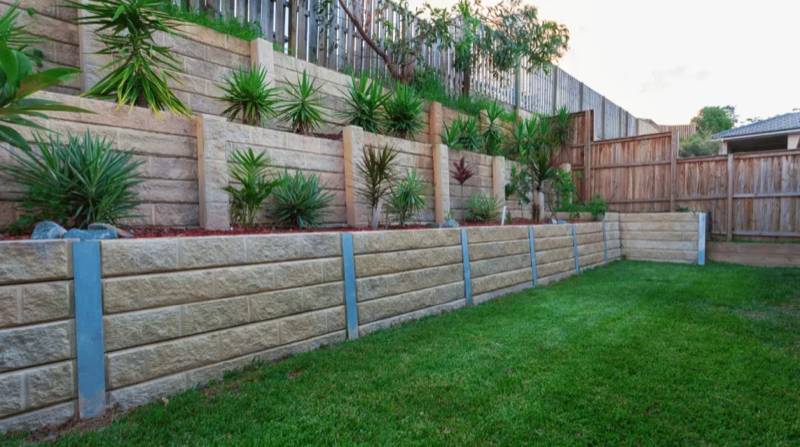
Ag pipe is slotted pipe laid low behind a wall. It collects water from the gravel and carries it to an outlet.
The parts
- Slotted pipe on a steady fall.
- Clean drainage gravel around and above it.
- Filter fabric between the soil and gravel.
- A clear outlet, and ideally a flush point.
Common mistakes
- The pipe stops at the end of the wall with no outlet.
- It is laid with dips that hold silt.
- Clay is used as backfill against it.
- The pipe sits above the level it should drain.
- The outlet gets buried by landscaping.
Where does it discharge?
To an approved point such as a suitable pit or stormwater line, depending on the site. Connections to stormwater should be done by a licensed plumber or drainer.
Checking it later
Look for flow at the outlet after steady rain and flush it if there is a flush point. See wall without drainage and backfill.
What to look at before backfill
Once the soil goes back, it is hard to prove what was installed. Before it is covered, photograph:
- The pipe along its whole length, with the fall visible.
- The joints and the outlet.
- The gravel depth and filter fabric.
- The flush point, if there is one.
Pipe with a sock or without?
Some ag pipe comes in a fabric sleeve. It can help in certain soils, but it does not replace fabric between the soil and the gravel. In some silty ground a sleeve can clog, so follow the drainage design.
Long and stepped walls
Water should not have to travel a long way to one tiny outlet. Long walls may need several outlets. Where a wall steps down, the drain must step or fall with it, so there is no low pocket that holds water behind one part of the wall.
Get your free retaining wall quote
Talk directly with Constantine, the builder. Free site assessment and an itemised quote within 24 hours.
Request Free QuotationFrequently Asked Questions
What size ag pipe is needed?
It depends on wall length and water. The design should state the size.
Does a small wall need ag pipe?
Many do, particularly in clay or below a slope. Some free-draining walls can do without.
Can ag pipe connect to the sewer?
No. Stormwater must not go into the sewer.