
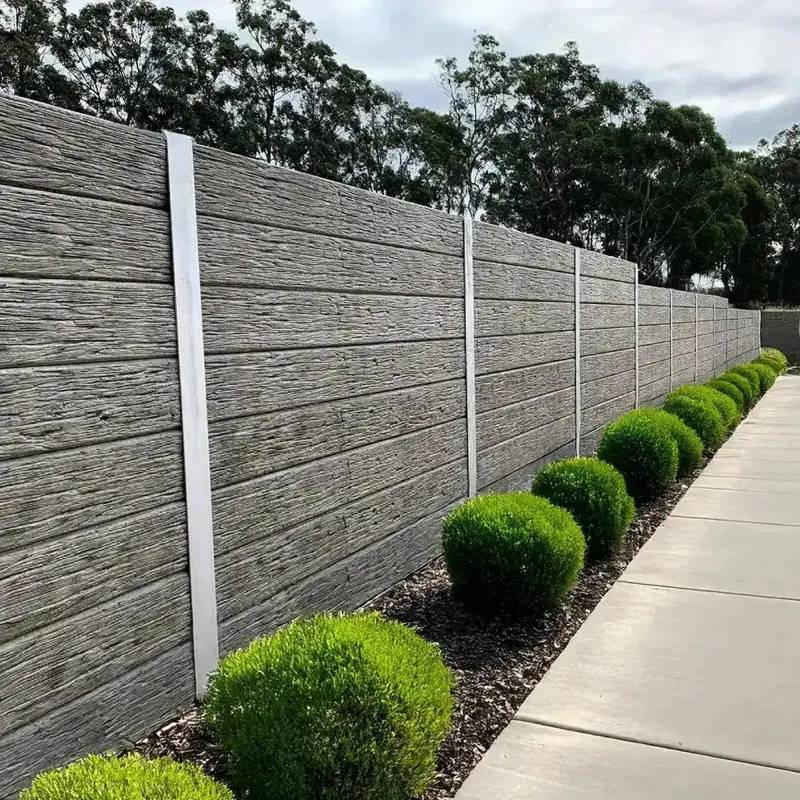
A besser block wall is laid from hollow blocks on a reinforced footing. Steel runs through the cores, which are then filled with concrete.
Why choose it
- A slim wall for its strength.
- Straight lines and neat corners.
- Can be rendered or clad.
- Useful near houses and garages.
How it is built
- Excavate and form the footing.
- Place footing steel and starter bars in the right cores.
- Pour the footing and lay the blocks.
- Fix wall steel and clean out the cores.
- Core fill in controlled lifts.
- Waterproof, drain and backfill once it has enough strength.
Where it goes wrong
- Starter bars in the wrong place.
- Cores not cleaned or fully filled.
- Backfilling too soon.
- No drainage behind a solid wall.
Compare with standard block walls and cantilever walls.
What to check on site
- Starter bars line up with the cores they belong in.
- Vertical and horizontal steel matches the drawings.
- Clean-out openings let mortar droppings be removed at the base.
- The fill mix flows around the steel.
- Photos are taken before filling.
Cost factors
Footing depth, wall height, the amount of steel, concrete pumping and the finish all matter. Rendering and waterproofing can add a large share, so compare a finished wall with a finished wall. A bare block price against a complete concrete sleeper price is not a fair comparison.
Where another wall may suit better
If there is no room for the footing or the excavation behind it, piers and sleepers may fit more easily. If the ground is likely to move, a flexible system such as a gabion may cope better than a rigid wall with a brittle finish.
Get your free retaining wall quote
Talk directly with Constantine, the builder. Free site assessment and an itemised quote within 24 hours.
Request Free QuotationFrequently Asked Questions
Is an unfilled block wall strong enough?
Not as an engineered retaining wall. The steel and fill do most of the work.
How long before backfilling?
The engineer sets this. It depends on concrete strength and support.
Can it be curved?
Gentle curves are possible with cut blocks. Other systems suit tight curves better.