
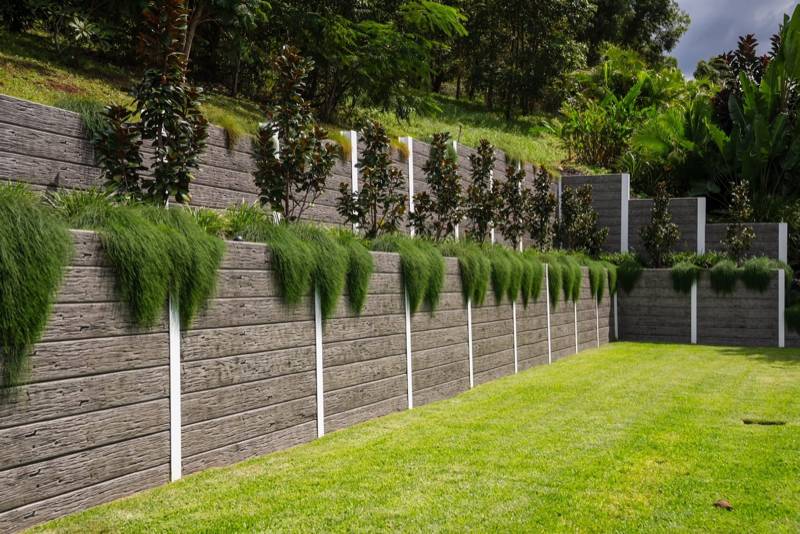
In a sleeper wall, each post acts like an upright beam fixed in a concrete pier. It resists the soil pressure passed on by the sleepers.
Post types
- H section: holds sleepers on both sides, used along the wall.
- C or channel section: used at ends.
- Corner section: lets the wall turn.
What sets the size
Wall height, post spacing, soil, slope and loads above. A heavier post does not fix a shallow pier.
Corrosion protection
Hot dip galvanising is common. Cutting, drilling or welding after galvanising exposes steel, so it needs proper repair. Coastal sites need extra thought.
Installation points
- Posts plumb and in line before the pour.
- Piers at the drilled depth, clean and free of loose soil.
- Concrete shaped to shed water off the post.
- Time allowed before loading.
See maximum sleeper wall height.
Signs a post is in trouble
- Rust flakes where the post meets the concrete.
- A gap has opened around the top of the pier.
- The post leans while its neighbours are straight.
- Sleepers have slipped or twisted in the flange.
- The concrete has cracked around the steel.
Surface rust on its own is less serious than loss of steel at ground level, where bending is high and water sits.
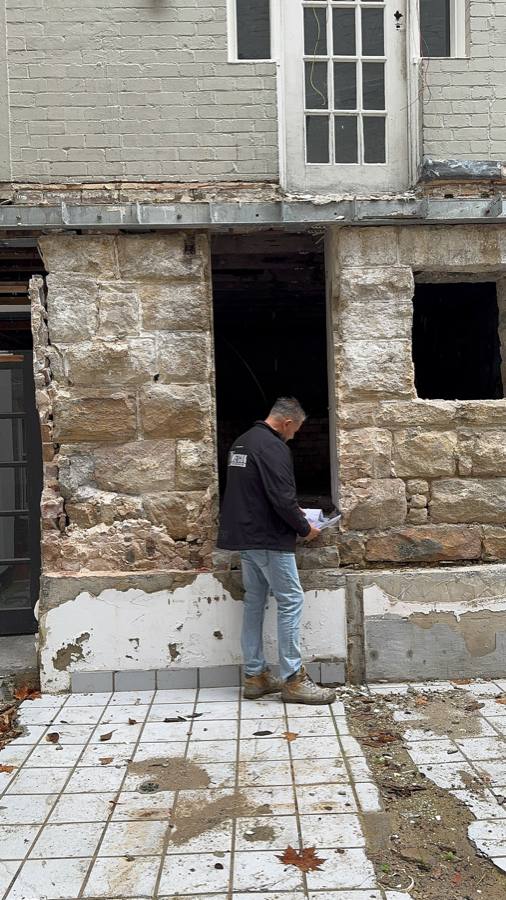
Replacing posts under an old wall
The soil is usually supported in sections, sleepers are taken out, and new posts go between or beside the old ones. If many posts have corroded at the same level, a complete rebuild may be simpler.
Match the sleepers and posts
Sleeper thickness must suit the space in the flange. A loose fit rattles and lets sleepers tilt. A forced fit can chip the sleeper ends or damage the galvanising.
Get your free retaining wall quote
Talk directly with Constantine, the builder. Free site assessment and an itemised quote within 24 hours.
Request Free QuotationFrequently Asked Questions
Can rusted posts be replaced?
Often yes, but the soil must be supported while it is done.
How deep do posts go?
It is an engineering question. Depth changes with height, soil and load.
Can a fence fix to the posts?
Only if the posts and piers were designed for wind load as well.