
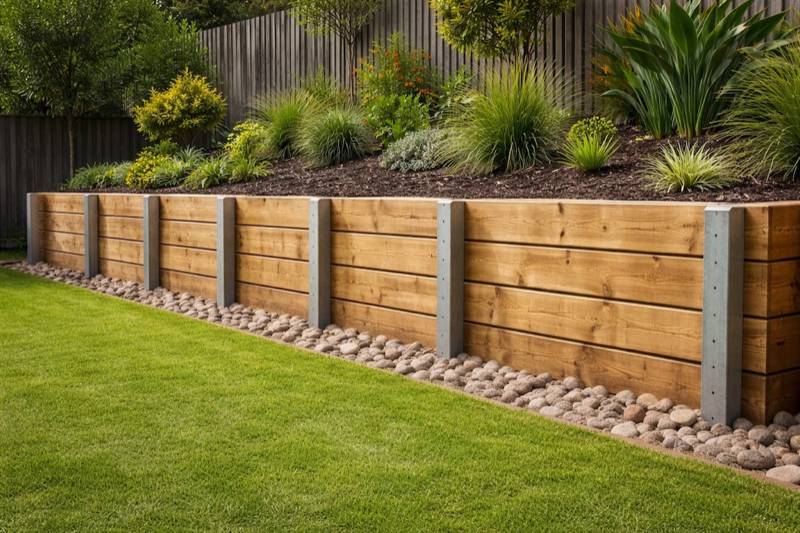
A small garden edge is a reasonable weekend project. A wall holding up a slope next to a house, driveway or boundary is a different job. Here is an honest guide to where the line sits.
What DIY can reasonably handle
- Low garden edges and raised beds, roughly knee height or under.
- Walls with nothing above them except garden.
- Walls well away from boundaries, buildings and drainage easements.
When to hire a professional
- Walls approaching the exempt height or above. See height before engineering.
- Walls supporting driveways, paths, pools or buildings.
- Walls on boundaries.
- Clay soils, steep slopes or poor drainage. See retaining walls on clay.
- Anything needing a CDC, DA or engineering.
Common DIY mistakes
- Post holes that are too shallow or narrow.
- No ag pipe, gravel or geofabric.
- Backfilling with clay.
- Timber not rated for in-ground contact.
- No outlet for drainage.
- Underestimating the excavation and spoil removal.
The real DIY cost
DIY saves labour, but you still pay for materials, equipment hire, concrete, spoil removal and disposal. If the wall fails, you pay for demolition and a rebuild. See professional retaining wall costs.
What a professional adds
- Correct footings, drainage and backfill.
- Machinery for excavation and spoil.
- Approvals and engineering where needed.
- Licensing and insurance.
- Workmanship you can rely on.
Get your free retaining wall quote
Talk directly with Constantine, the builder. Free site assessment and an itemised quote within 24 hours.
Request Free QuotationFrequently Asked Questions
Can I build a retaining wall myself in NSW?
Low garden walls are reasonable DIY projects. Taller walls, loaded walls and boundary walls should be built by a professional and may need approval.
What is the most common DIY retaining wall mistake?
Shallow footings and no drainage, which are the main reasons walls lean and fail.
Is it cheaper to build a retaining wall yourself?
You save labour, but materials, hire, spoil removal and the risk of a rebuild often narrow the gap.