
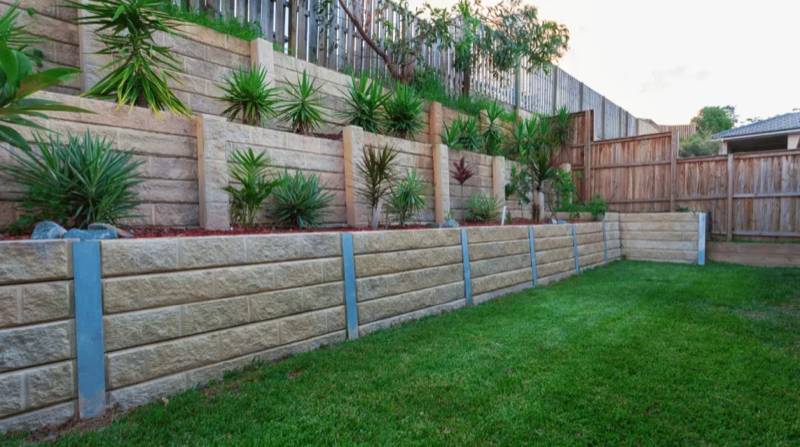
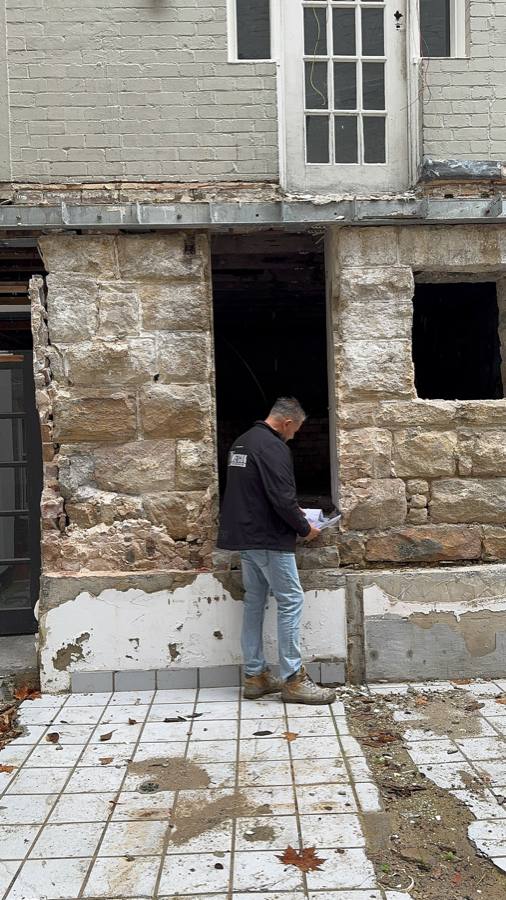
Much of Western Sydney, the Hills and parts of the North Shore sit on reactive clay. Clay swells when wet and shrinks when dry, and it holds water. All three make life hard for retaining walls.
Why clay is a problem
- Swelling pressure: wet clay pushes harder on the wall.
- Poor drainage: water sits in clay instead of draining away.
- Movement: shrinking and swelling cycles loosen footings over time.
- Lower bearing capacity when saturated.
The best retaining walls for clay soil
Most wall types can work on clay if they are designed for it. Concrete sleeper walls with deeper post footings, engineered block walls and reinforced concrete walls are common choices. Treated timber in wet clay tends to rot faster.
Design and build tips
- Deeper and larger footings to reach more stable ground. See retaining wall footings.
- Generous drainage: ag pipe, a wide gravel zone and geofabric.
- Do not backfill with clay directly behind the wall. See retaining wall backfill.
- Control surface water with a dish drain or shaping at the top.
- Keep walls lower or terrace them where possible.
- Engineering for taller walls or walls with loads above.
Signs of clay-related problems
- Walls leaning more after wet periods.
- Cracks that open and close with the seasons.
- Water seeping out at the base of the wall.
See fixing a leaning retaining wall.
Get your free retaining wall quote
Talk directly with Constantine, the builder. Free site assessment and an itemised quote within 24 hours.
Request Free QuotationFrequently Asked Questions
What is the best retaining wall for clay soil?
A wall designed for clay: concrete sleepers with deeper footings, engineered block, or reinforced concrete, all with generous drainage.
Why do retaining walls fail on clay?
Clay swells and holds water, increasing pressure on the wall and loosening footings over time.
Can I use clay to backfill a retaining wall?
Not directly behind the wall. Use clean aggregate in the drainage zone.