
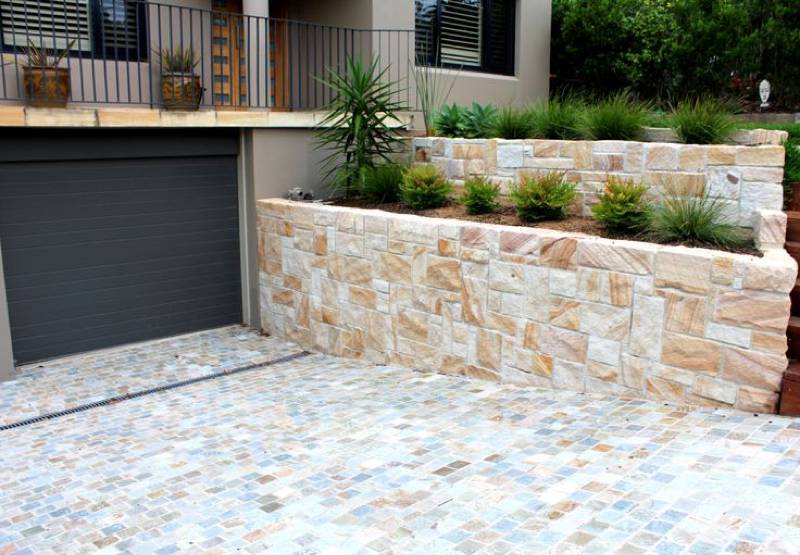

A surcharge is extra load on the ground behind a wall. It adds sideways pressure.
Common surcharges
- Parked cars and delivery trucks.
- Houses, garages and sheds.
- Pools and spas.
- Stacked soil or building materials.
- Ground that slopes up behind.
- Another retaining wall.
Fences are different: they catch wind and pull on the wall or its posts.
Tell the engineer about future plans
A lawn today may be a driveway in two years. Designing for it early can be easier than strengthening later.
Adding load to an old wall
Ask for the drawings. If there are none, do not assume spare strength.
During construction
Machines and material stacks can overload a new wall before it is ready. Follow the load limits. See driveway walls and pool walls.
A simple example
A one metre wall under a lawn mostly resists soil. Put a driveway next to it and the weight of a car spreads through the ground, adding pressure near the top of the wall. The wall looks the same, but the job it does has changed.
Short term loads count too
Moving day, a skip bin, a concrete truck or a pallet of pavers can be heavier than anything the wall will see for years afterwards. Keep them back from the edge unless the engineer has allowed for them.
Information worth keeping
Write the allowed load on the drawing you keep with the house papers. Future owners and trades can then see whether a pool, carport or new driveway was considered. It is easier than trying to work backwards from a finished wall.
Get your free retaining wall quote
Talk directly with Constantine, the builder. Free site assessment and an itemised quote within 24 hours.
Request Free QuotationFrequently Asked Questions
Can I park near the top?
Only if the wall and ground were designed for it.
Is a garden bed a surcharge?
A raised bed adds weight and water, so it should be considered.
Can I add a fence later?
Check the design first, as fence posts can overload it.