
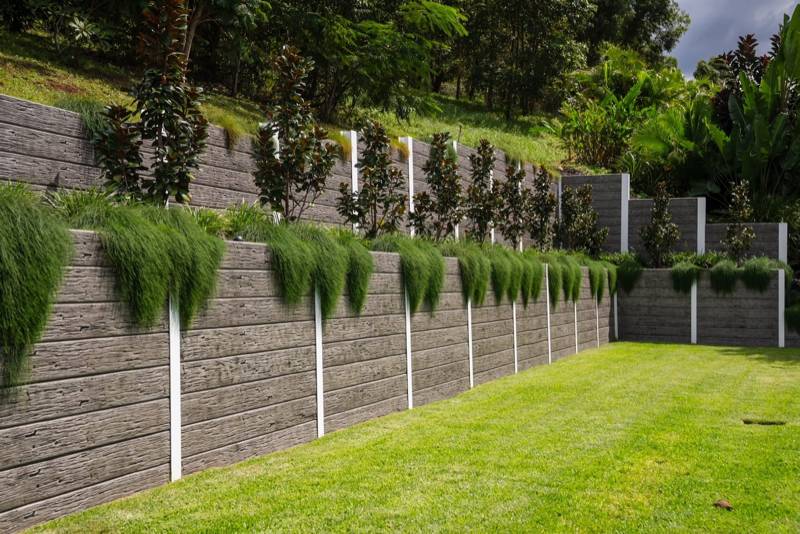
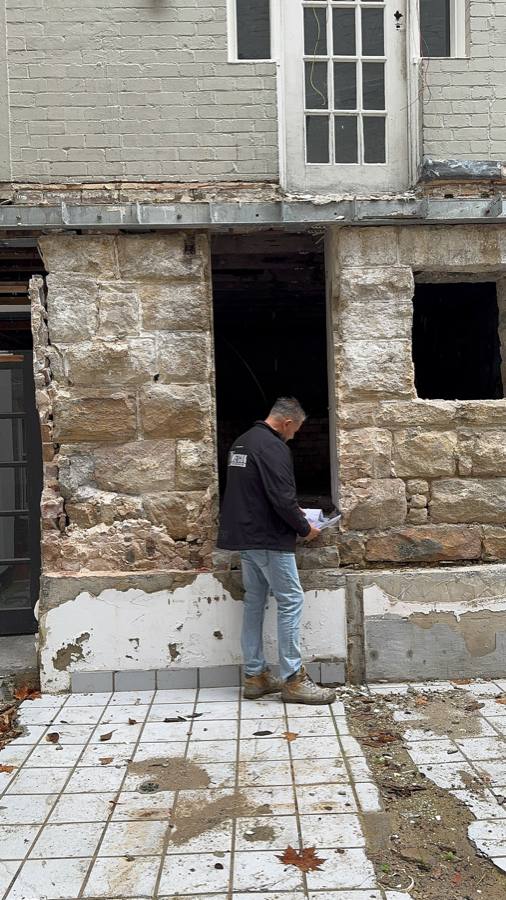
Footings spread the weight of a house into the soil around and below them. Digging too close can let that soil move.
Check first
- How deep the footing is. Test pits may be needed.
- How far away and how deep the new cut will be.
- Whether the soil is clay, fill, sand or rock.
- Whether the house already has cracks.
Ways to manage it
- Move the wall further away.
- Build it in short sections.
- Install shoring or piles first.
- Underpin the footing where specified.
- Keep water out of the open cut.
Before and during
Record existing cracks with photos. Agree how movement will be checked and when work stops.
The neighbour's house
The same care applies to footings over the boundary. Speak to them early and get engineering advice. See neighbour disputes.
How staged work helps
Instead of opening the full length, the cut is made in short sections. One section is supported or built before the next opens. This keeps more soil in place and gives everyone time to respond to unexpected ground.
Signs to stop
- New or widening cracks in the house.
- Doors that begin to stick.
- Soil falling from the cut.
- Water entering the excavation.
- A footing that differs from the drawings.
Stop, move people to safety and contact the engineer.
Old houses need extra care
Older Sydney homes may have shallow brick or stone footings with little or no reinforcement. They can tolerate slow movement in one place and crack suddenly in another. Digging a test pit, when the engineer asks for one, is a small cost next to repairing a wall of the house.
Get your free retaining wall quote
Talk directly with Constantine, the builder. Free site assessment and an itemised quote within 24 hours.
Request Free QuotationFrequently Asked Questions
How close can I dig to my house?
There is no safe general distance. It depends on footing depth, soil and cut depth.
Can the trench stay open?
Only as long as the engineer or method allows. Rain can change it quickly.
Do I need a dilapidation report?
It is useful near buildings, so everyone has the same record.