
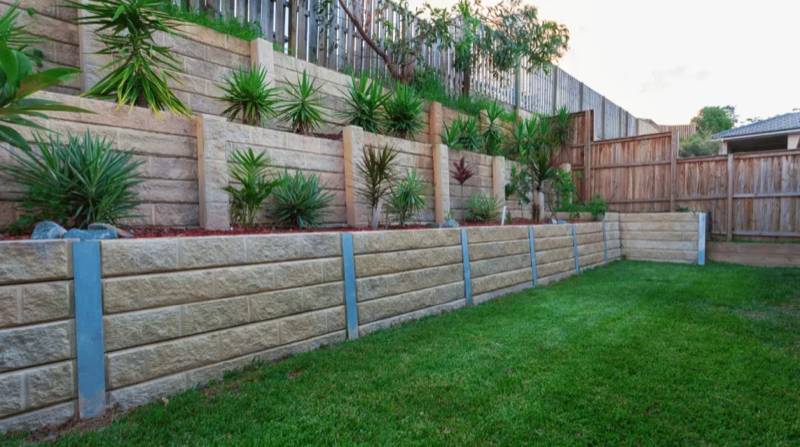
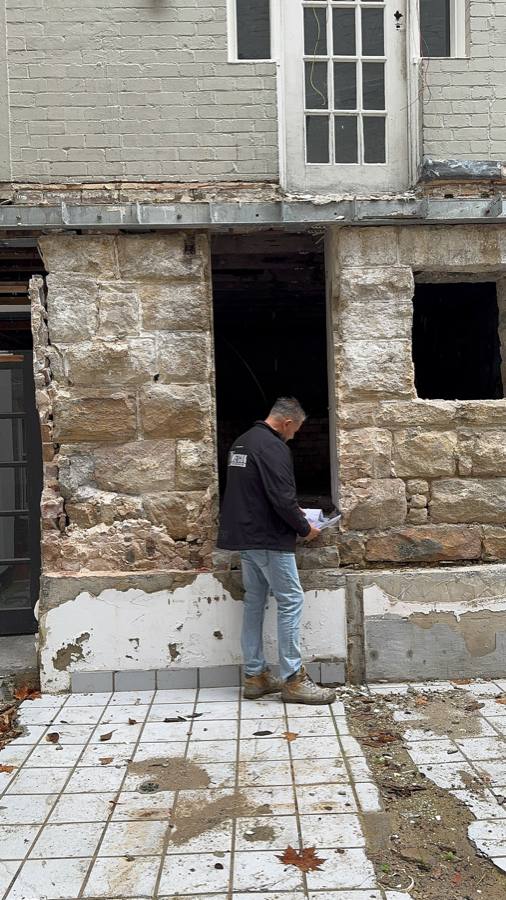
Ask any experienced builder why retaining walls fail and the answer is almost always water. Drainage is the cheapest part of a retaining wall and the part most often done badly.
Why drainage matters
Wet soil is heavier than dry soil, and water trapped behind a wall adds its own pressure. After a week of Sydney rain, a wall with no drainage can be carrying far more load than it was designed for. That is when walls lean, bulge or collapse.
The parts of a drainage system
Ag pipe
A slotted agricultural pipe at the base of the wall, behind it, laid with a fall to the outlet. A geotextile sock stops it clogging with fine soil.
Drainage gravel
Clean, free-draining aggregate behind the wall, usually at least a few hundred millimetres wide, so water can drop straight to the pipe.
Geofabric
Filter fabric between the gravel and the natural soil, so silt does not wash into the gravel and block it.
Drainage cell
A plastic drainage panel fixed to the back of the wall, used where there is little room for gravel, such as against basements and boundary walls. It carries water down to the pipe.
Weep holes
Openings through the face of block, concrete and stone walls that let water escape.
The outlet
The pipe must discharge somewhere lawful: a stormwater pit or approved drainage point, never onto a neighbour's land.
Surface water
Water running over the top of the wall soaks straight into the backfill. A dish drain or shaped ground at the top of the wall carries it away.
Signs your wall's drainage has failed
- Wet patches, staining or white salts on the wall face.
- Soggy ground behind the wall long after rain.
- Soil washing out through gaps.
- The wall starting to lean. See leaning retaining walls.
Every METCON wall is drained
Ag pipe, aggregate, geofabric and a proper outlet are included in every wall we build. See also how a retaining wall is built.
Get your free retaining wall quote
Talk directly with Constantine, the builder. Free site assessment and an itemised quote within 24 hours.
Request Free QuotationFrequently Asked Questions
What goes behind a retaining wall for drainage?
An ag pipe at the base with a filter sock, clean drainage gravel, geofabric against the soil, and an outlet to stormwater.
What is a drainage cell?
A plastic drainage panel fixed behind a wall where there is no room for gravel. It carries water down to the pipe.
Where should retaining wall drainage go?
To a stormwater pit or approved drainage point, never onto a neighbour's property.